... for Progressive Populism ... for the Arc of the Sun ... for the Next American Revolution ... for Living Energy Independence ... for a Brawny Recovery ...
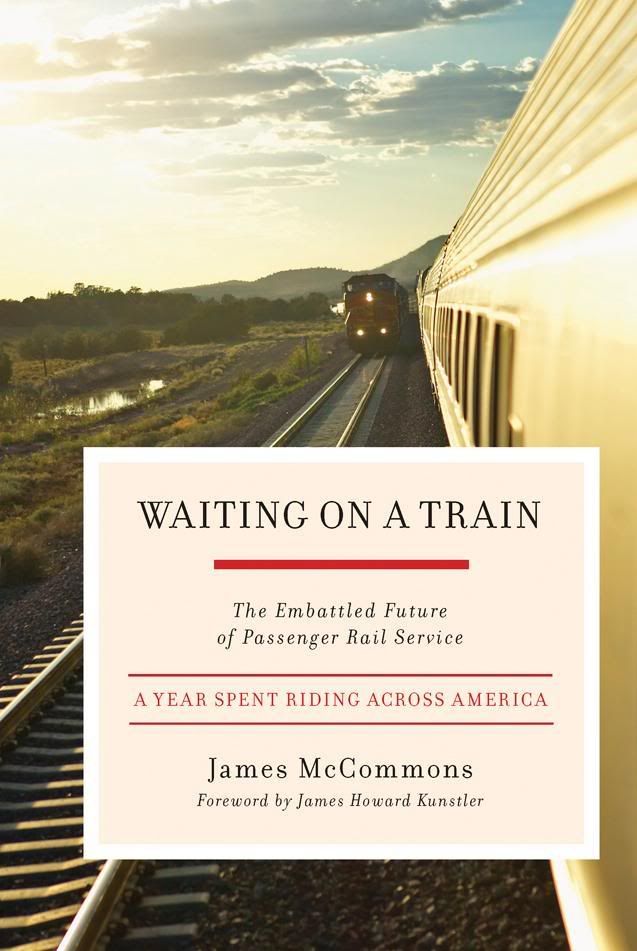 Back in the 29 Nov 2009 Sunday Train, Frequency and Waiting on a Train, I reacted to a point made in John McCommon's book, Waiting on a Train:
"Once those intermodal trains can go through Stampede Pass, it will take some traffic off the main line and free up more room for additional passenger trains," said Uznanski. By bringing the number of trains up to eight a day between Vancouver and Portland, ridership and ticket revenue will increase significantly. Currently ticket sales - what is known as farebox - cover 43% of the Amtrak Cascades' operating expenses; the state subsidizes the remainder. Run eight trains daily, however, the farebox recovery goes up to 70%. It's all about frequency. When trains are frequency and convenient, ridership - particularly business travel - grows dramatically, said Uznanski. It was a mantra I was to hear from experts all across the country - frequency builds ridership and only frequency significantly builds farebox recovery. Sure its great to have trains running more than 100mph in a corridor, but if there are only a couple of trains a day, they just aren't convenient enough to move people off the highway or away from the airport. - John McCommons, Waiting on a Train, Chelsea Green Publishing: Vermont, p. 51This came back to mind when I was thinking last week about the "Cornhusker Rocket" proposal to reintroduce regular corridor service between Omaha and Chicago via Des Moines, Iowa City and the Quad Cities. Often times, a substantial benefit in getting train speeds up is that ability to operate more services per day with the same number of trains.
___________________________
Read the Sunday Train and join the conversation at:
The Stars Hollow Gazette
HillbillyReport.org
Progressive Blue
Daily Kos


 The Iowa Department of Transport has just completed the Chicago to Omaha Regional Passenger Rail System Planning Study, to select its preferred alignment for a detailed Environmental Impact Report.
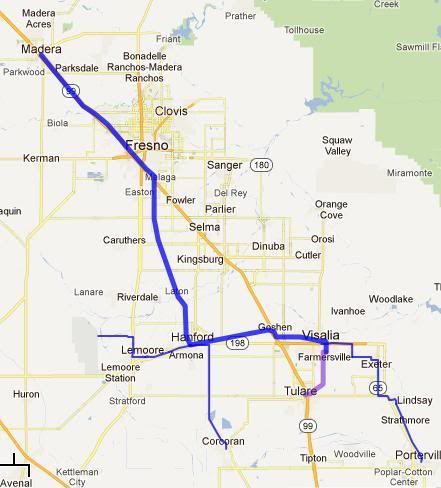 Kings County officials have been
 One element of the recent California HSR "revised" draft 2012 Business Plan (which we shall call the Other, Other Plan) involves looking to one particular means of finance in addition to general fund bond finance and Federal transport grant funding:
 I saw this story a couple of weeks ago, but between the happenings in California and some unanswered questions I had, I haven't mentioned it yet.
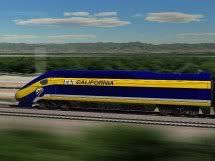 As I mentioned in last week's Sunday Train, the California HSR Authority came out with a revised draft Business Plan.
 Nearly a month ago, Yonah Freemark had a post at
 Yeah, OK, its not Sunday, but I got called on Saturday morning after a Friday night class to substitute for a colleague, and that threw me off completely. Fortunately for the Sunday Train, I am massively underemployed, so there is Monday afternoon available to finish composing what I been thinking about this week.
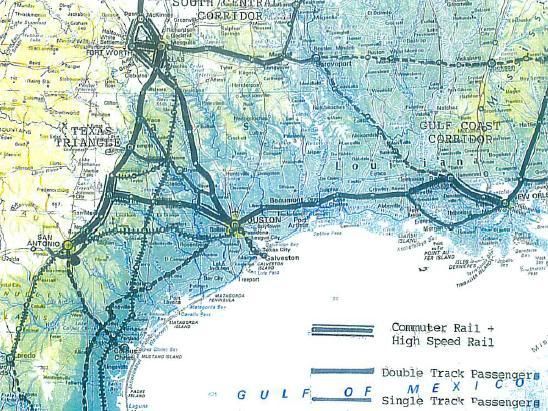 Back in the 90's, Texas tried to get an Express HSR system off the ground (that is, a bullet train system somewhere in the 125mph to 220mph range) with the "Texas Triangle" project.
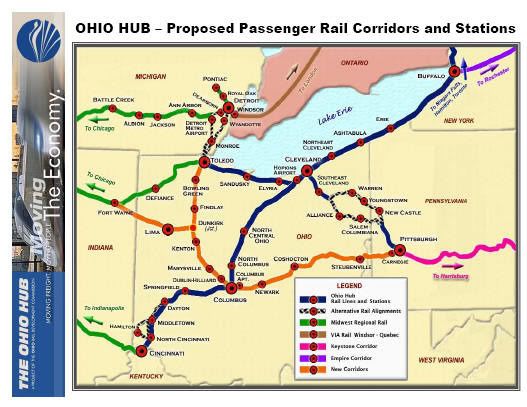 OK, now, thanks to John Kasich, we are not going to get started on that Rapid Rail HSR network before 2015. Indeed, Democrats would probably have to take back one of the two Chambers of the State Legislature to be able to hit the ground running on getting that Rapid Rail HSR network going in 2015.
 Chairman Mica
 The headline spin on House Chairman of the Transport Committee is that he is proposing to privatize the NEC to allow HSR to be built in this decade.
 There was shocking news early this June about May economic performance: GDP growth in May was about the same as the average for the first quarter of 2011, and so employment growth was virtually stagnant, and indeed fell behind growth of the labor force.
 "Why We Fight" is a common feature of propaganda in support of a war. Here, tonight, it is a double entendre. On tonight's Sunday Train, in honor of Memorial Day tomorrow, with two wars launched in the past decade and still ongoing (though in one, "combat operations" by US forces have finished, so any fighting and dying is of the support and training type of fighting and dying), and another recently started up, what it means when we notice that "why we fight" has a simple answer: oil.
 The big news on the High Speed Rail front this week is the effort by the California Legislative Analyst to prevent the High Speed Rail project in California from breaking ground. This is in two of their recommendations:
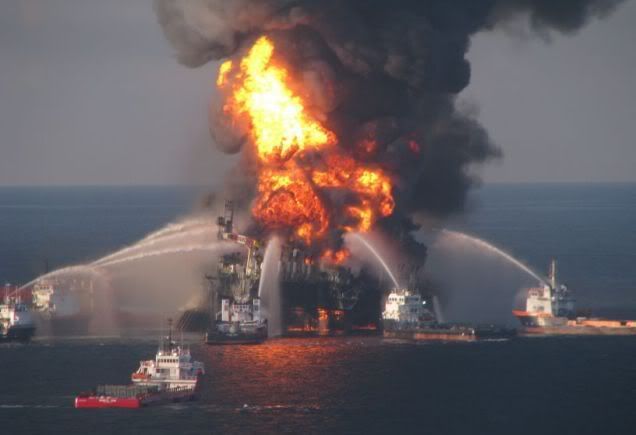
 The flashy rail projects are the very HSR projects to build bullet trains serving urban areas with millions of people.
 I've written several times about the direct potential of the Steel Interstate project to cut our oil imports by 10% by getting long haul freight trucking off the road. It would at the same time relieve the crushing burden imposed by long haul trucking on our over-worked, under-maintained Interstate, National and State highways, help get renewable energy resources from places that they are to places people need electricity, and of course support long distance Rapid Passenger Rail offering dramatically improved reliability and transit speed, supporting operating surpluses with multiple services per day.